
Part 1. The development of the protagonist
One of the most overlooked aspects of cinema is the complexity of character depth. In Blade Runner 2049, the layered interactions between K (Ryan Gosling) and his holographic companion, Joi (Ana de Armas), are deeply depressing when you look closely at what they represent.

If you take the time to appreciate every detail a movie conveys—the lighting, environment, props, production design, costumes, and color (elements often grouped together as mise-en-scène)—you start to appreciate visual storytelling the way a cinephile or film scholar would.
So, let me break down these two characters, examine how they interact, and explore what the film’s broader theme of their longing and desire to feel truly looks like.
Agent K, a synthetic replicant of the most advanced technological advanced model, the Nexus-9, is a Blade Runner in the future after Ridley Scotts 1982 Blade Runner with Harrison Ford. His body is made with superior strength and intelligence, his sensory perception has been dampened to things like pain and his emotional expression has been blunted.
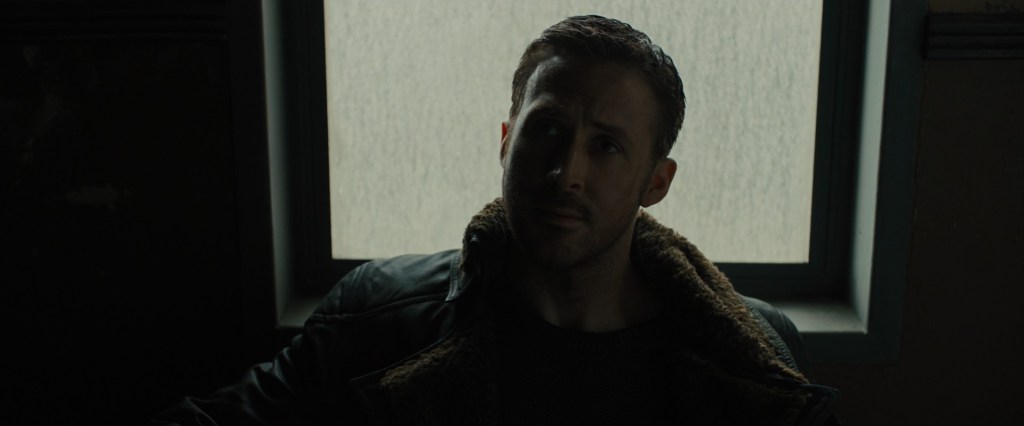
In this world where Agent K exists, he is faced with rejection and discrimination amongst normal, organic humans, often faced with expressions of hate and being referred to as “Skin-job”. We see this when he returns to LAPD headquarters for his post-traumatic baseline test—a psychological assessment designed to ensure replicants haven’t deviated from their programming by developing empathy, autonomous feelings, or a sense of self.
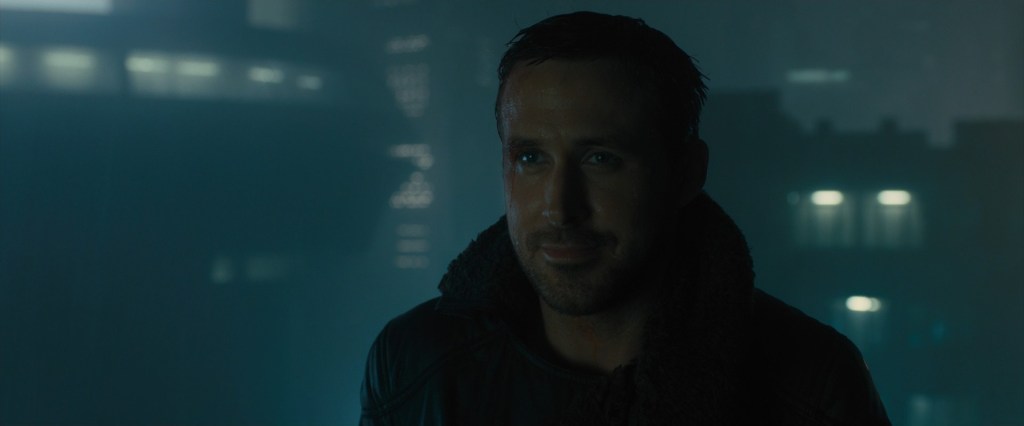
Throughout the film, K navigates the complex emotional states tied to awakening and self-discovery—experiences that mirror our own ongoing evolution. Whether this quiet intensity stems from Ryan Gosling’s nuanced performance or Denis Villeneuve’s precise direction is open to debate, as both actor and director offer compelling evidence for their respective contributions. I didn’t truly grasp the absolute tragedy of his character until exploring these themes in my film course. Ultimately, the film presents a poignant paradox: K constantly fights to break free of his programming, yet a world that values him solely for his utility as a replicant resists his attempts to forge an independent existence at every turn.

If I were to try and frame you into thinking about K, I would prompt you to imagine how deeply isolating it would be to move through a world where your mind and body operate entirely differently from almost everyone around you—less reactive, fundamentally detached. At the film’s close, we’re nudged to see K’s self-sacrifice for Deckard as his ultimate human awakening. But I find that conclusion tragic in a darker way: no matter how hard you try, some people will never let you escape what they want you to be. After a lifetime of hard-coded servitude, his grand act of supposed autonomy still ends up being a life not of his choosing, but one dictated by what others find most useful for themselves.
A true Shakespearean ending.