
This weekend saw my nutrition falter; I ended up surviving on a morning protein shake, coffee, and sandwiches. Friday I kicked things off with my first female-centered film noir, 1948’s Sorry, Wrong Number. Saturday I wrote a physics exam—and promptly remembered that I wrote the scientific notation incorrectly—followed by a screening of Club Kid, which I didn’t realize was an LGBTQ+ film. Finally, on Sunday, I wrapped up the weekend with another 1950s female-led film noir, 1952’s Sudden Fear.
It was Friday, and I had been cramming physics all week; I was even contemplating canceling the movie night so I wouldn’t jeopardize my grade. But I looked into the film, and it was widely praised for its time.
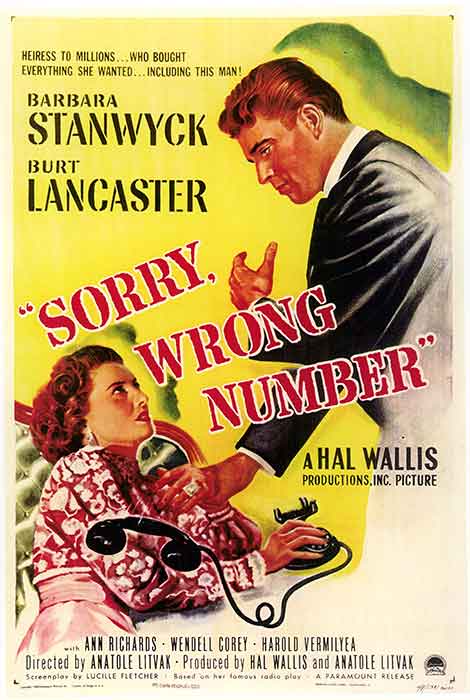
Looking back at Sorry, Wrong Number, it’s remarkable how well it still holds its ground today. There were genuinely comedic moments if you gave it a second thought. The humor might not have been intentional, but given the time period and our current culture, some of the lines came off as deadpan—though it’s entirely possible it was intentional and I’m just maturing into that more complicated style of comedy.
Whatever the case, it was funny one way or another. These films were presented as feminist works, and if you address them through a feminist lens, they touch on issues that feminism genuinely cares about—like disability, for instance. The protagonist, Leona Cotterell Stevenson (played by Barbara Stanwyck), repeatedly refers to herself as an invalid, bedridden and confined to a wheelchair, believing she is utterly incapable of movement. Yet, the doctors were entirely convinced her condition was purely psychological.
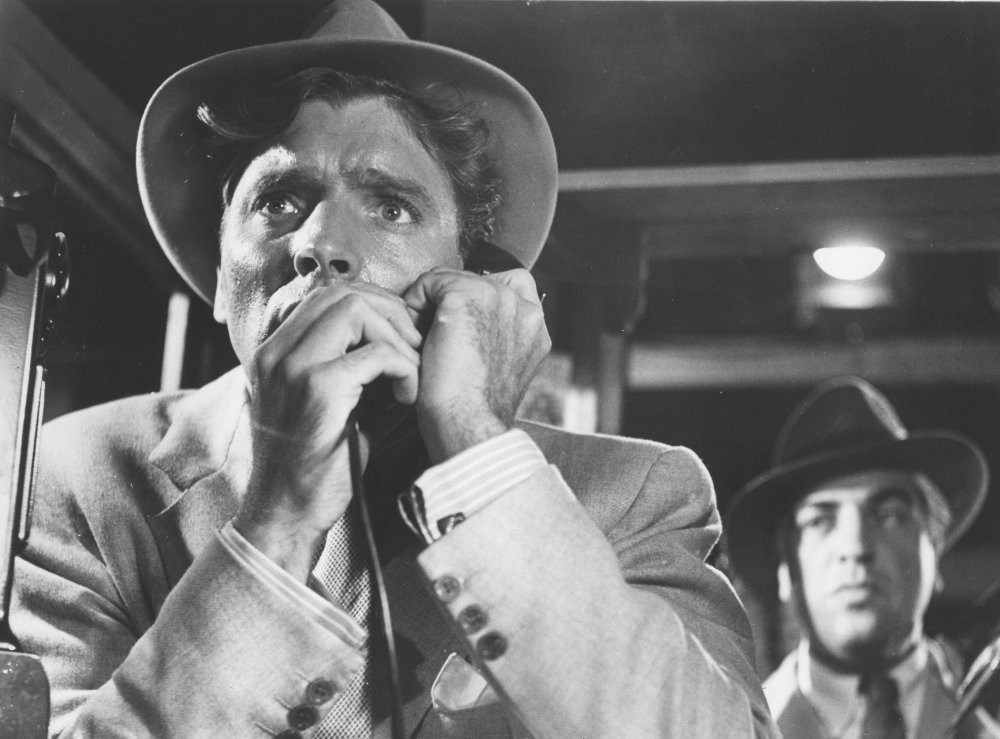
Her husband, Henry Stevenson (Burt Lancaster), was told the exact same thing by the doctor and bought into it completely. Then, at the very climax of the film, Henry tells her she just needs to stand up and scream, and if she does, she’ll be saved. Over the course of the entire movie, she cries out that she’s sick and can’t walk, but everyone around her just shrugs it off. She ultimately dies because no one takes her seriously—the doctor writing it all off as hysteria!
In a way, though, I didn’t feel sorry for her at all. Leona was cold and controlling, and her father, James “J.B.” Cotterell (Ed Begley)—the wealthy owner of a large pharmaceutical company—was also a total jerk. He basically blocked job opportunities whenever Henry tried to be his own man, and he wasn’t fond of Henry in the first place. Leona wasn’t any different; she always wanted things her way. Living in her father’s house with Henry working for the family business, Henry wasn’t even allowed to touch her, kiss her, or show affection in a way she didn’t approve of. I had a girlfriend like that once; eventually, I had enough of the relationship and got sick of being controlled.
The ending was what really got me, because Leona was finally telling the truth, yet in her final moments, Henry kept insisting, “You just have to get up and move.” It’s not like she couldn’t move at all—she had managed it before, just not very well. I felt that film was more about the suffocating pressure of what was going on around her than anything else, but maybe that’s just my social psychology roots coming out to play.
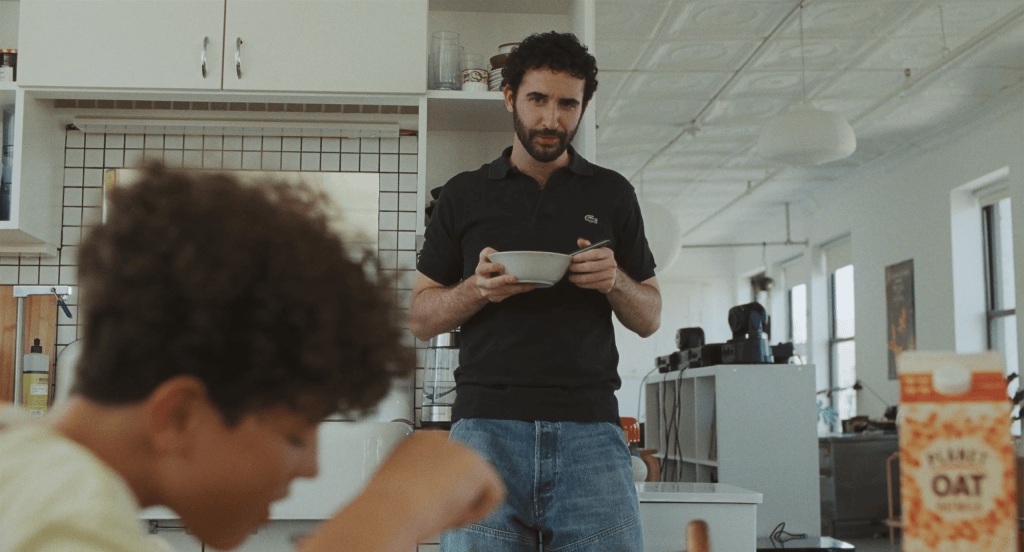
After my physics exam, I went to see another movie that I had heard good things about. I think the people recommending it were queerfolk, allies, or activists themselves. The movie was called Club Kid, and the actors were fantastic. The way the protagonist displayed ambivalence about being a parent—or feeling entirely unprepared and clueless—was played with such immature authenticity.

The music in that movie was awesome, and it was genuinely hilarious to have this flamboyant gay squatter who was an aspiring queer philosopher. It was a fun time, and while I felt a little uncomfortable at times, I also didn’t realize that particular subculture existed exclusively within the LGBTQ+ space. The movie kind of sucked at the end because he lost his kid, which was a real bummer. Although it’s realistic, I didn’t expect it to go any other way since the guy is a drug dealer.
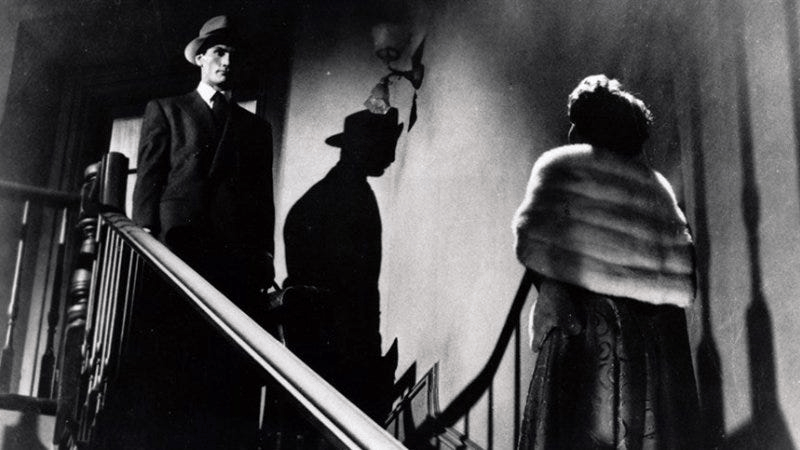
The third film I saw on Sunday was Sudden Fear, another 1950s film-noir with a powerhouse female lead. The main character, Myra Hudson (Joan Crawford), is a strong, independent woman who writes plays, and the movie starts off with her firing the male lead, Lorne Blaylock (Jack Palance). On the train ride home, Lorne happens to be in the same car; they start talking, play cards, go on dinner dates, and eventually fall in love, or at least Myra did.
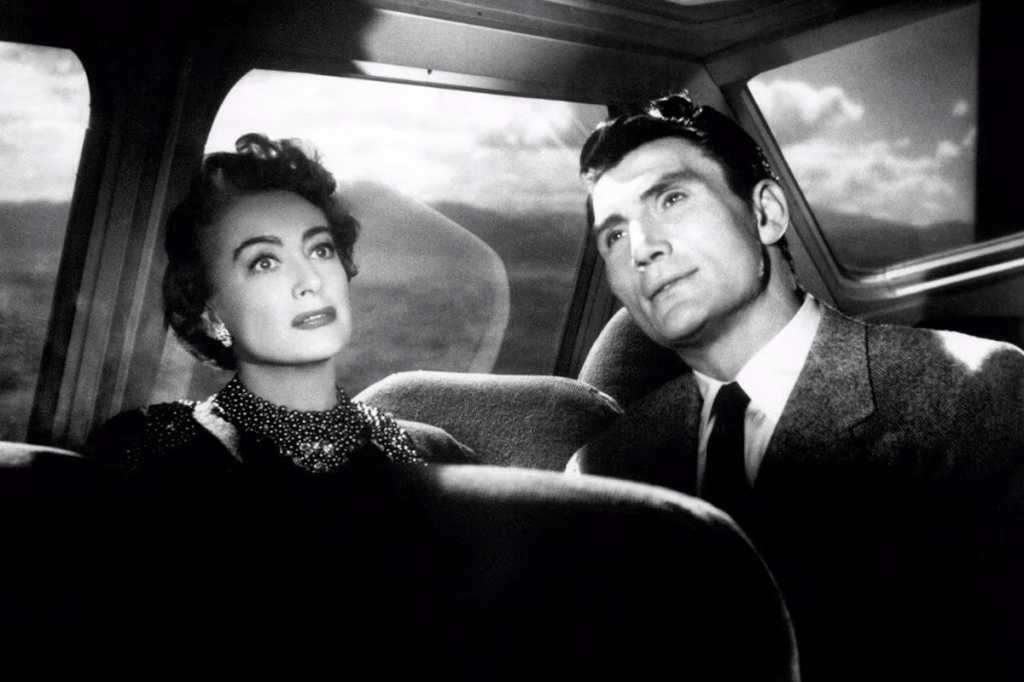
The plot takes a sharp turn after they marry, when it turns out Lorne has a master plan to murder Myra and inherit her fortune, working alongside his former lover, Irene Neale Garnell (Gloria Grahame). Foolishly, because Irene starts dating Myra’s brother to gather information, they accidentally spill details of their plot into a Dictaphone left running in Myra’s office.
The rest of the movie turns into a massive game of cat-and-mouse and psychological chess. It builds up to the very end when Lorne is exposed, and Myra—while snooping around Irene’s apartment—is discovered and chased by Lorne. He attempts to kill her, but ends up accidentally killing Irene and himself instead. The absolute craziest part? Even through all that betrayal, Myra actually tries to warn Lorne before he ultimately crashes and dies.
That was the most shocking thing in the movie: that she would try to save the very person who tried to murder her for her money. Before she found out about the murder plot, she had even been updating her will so that all her real estate and wealth would go to Lorne. I couldn’t possibly do that, if someone tries to kill me, why the hell would I want to save them?
Especially if they were trying to kill me in the car I bought them, outrageous!


