
Greetings!
Well Halloween is over, now it’s my birthday month, and then Christmas! Not that I am overly enthusiastic for the snow, I just like the whole Christmas atmosphere.
I have been real busy with film, and science, but mostly film.

So the histogram is skewed to later in the year, this is reflective of me starting to study cinema and movies more in-depth. Also, I volunteer at the annual Toronto International Film Festival, then I attend the Toronto After Dark Film Festival, this year I attended my first HotDocs Festival. It was quite the experience!
I wrote a short essay on Ridley Scott’s 1965 Boy and Bicycle and his 1982 Blade Runner that I wanted to share with you! Just because I am not writing here, this doesn’t imply that I am not writing. This is definitely not the case (even though I feel like a lazy bum!). Currently, I am learning to write better about different topics; trust me, I can now write about viruses (like influenza, as we approach the transmission stage of the flu season). Did I tell you that over the summer I think I contracted West Nile after being attacked by mosquitoes?
Refracted Gazes and Fractured Spaces: Ridley Scott’s Visual Signature of Humanity
In Ridley Scott’s cinema, the interrogation of the human condition moves along an evolutionary trajectory—tracing a path from the psychological isolation of organic youth to the manufactured crisis of the synthetic replicant (Boy and Bicycle; Blade Runner). Across both Boy and Bicycle (1965) and Blade Runner (1982), Scott investigates authentic humanity through two recurring auteur signatures: subjective ocularization via reflective surfaces, and macro-to-micro spatial transitions. Alexandre Astruc posited that cinema evolves through the caméra-stylo (camera-pen), transforming the camera into an instrument of personal philosophical expression akin to a pen (17–18). Expanding on this, Andrew Sarris synthesized auteur theory through technical competence, distinguishable personal style, and the tension generating “interior meaning” (562–63). Through these visual mechanisms, Scott establishes that humanity is not conferred by biological birthright or corporate-sanctioned memory, but by the capacity to inhabit a finite existence and bear authentic visual witness to the world.
Scott’s foundational personal style element emerges in Boy and Bicycle through subjective handheld camera movements paired with reflective media to map the protagonist’s interior psyche. In Scene 1, Shot 6, a wobbly camera tracks the waking boy toward a clear bedroom mirror, as seen below, while his voiceover rebels against parental authority.
[

Figure 1 – The youth’s gaze captured across reflection, Boy and Bicycle (02:44)
Here, the clear mirror captures a shadowed portrait of disheveled adolescent frustration. However, in Scene 7, Shot 15, after encountering a dead dog carcass, the boy gazes into a muddy beach puddle, as seen below, where rippling water distorts his image. The distorted surface fractures his superficial teenage persona, transforming the reflection into an existential mirror that forces him to confront human mortality.
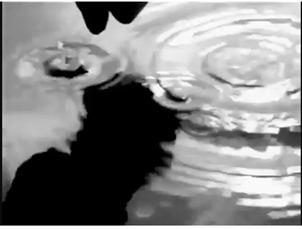
Figure 2 – Shot 15 (7:51 – 18:32) Distorted puddle reflection forcing a confrontation with mortality, Boy and Bicycle
In Blade Runner, Scott deepens this ocular fixation into a radical critique of mechanical surveillance and empathy. Because replicants cannot trust synthetic memory implants, empirical sight becomes their only authentic tether to reality. When Zhora is shot, her body shatters mannequin display cases, as seen below, exposing how corporate society objectifies and consumes organic feeling.
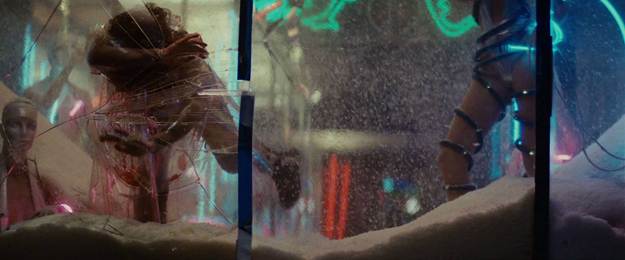
Figure 3 – Zhora’s death shattering the consumerist display window, Blade Runner
The falling glass shatters the voyeuristic gaze, asserting her suffering humanity while destroying the store display where she is commodified as an object. This optical interrogation culminates when Roy Batty forces his thumbs into Eldon Tyrell’s eyes, as seen below.
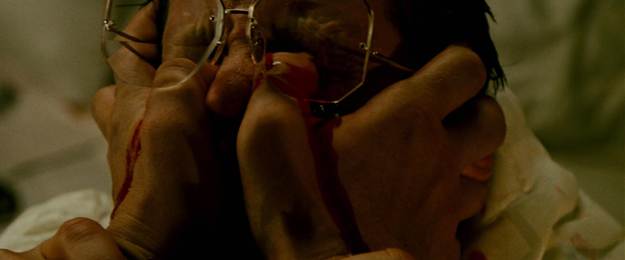
Figure 4 – Roy Batty blinding Eldon Tyrell, Blade Runner
Batty violently strips his creator of his mechanical surveillance apparatus, forcing Tyrell into absolute darkness. Because replicants authenticate existence solely through their eyes, blinding Tyrell symbolically extinguishes the life the creator gave him—inflicting the ultimate death upon his maker.
Scott’s second stylistic signature is the macro-to-micro spatial transition, compressing oppressive environments into intimate claustrophobia. In Boy and Bicycle, high-angle crane shots capture the boy isolated against sprawling industrial horizons before tracking shots funnel the vast landscape down into narrow alleyways and tight frames under the pier, as seen below.
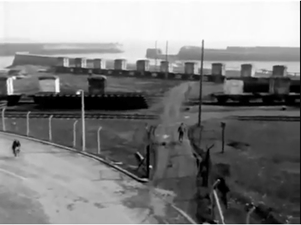
Figure 5 – Scene 3 Shot 6 (5:55 – 6:25) camera follows boy on bike, left, and around about 180-degrees
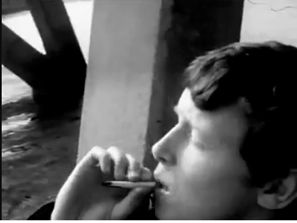
Figure 6 – Scene 4, Shot 2 (6:39) smokes and looks out at sea
The vast framing emphasizes how small the boy is against an indifferent adult world, while the inward shift locks the viewer inside his interior isolation.
Similarly, Blade Runner introduces 2019 Los Angeles through a soaring, hellish industrial vista dominated by the Tyrell pyramid, only to cut instantly to an extreme close-up of an iris reflecting flames, followed immediately by the suffocating Voight-Kampff interrogation room, as seen below.
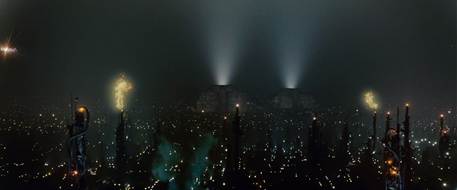
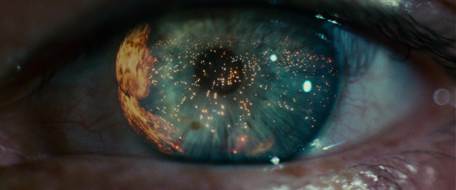
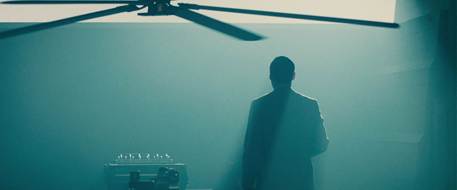
Figure 7 – Macro cityscape transitioning into the Voight-Kampff chamber, Blade Runner
By framing the city inside the pupil, Scott suggests that the universe is contained within visual perception—the eye operating as the camera lens of our existence. The macro cityscape establishes corporate state power, while the rapid inward plunge encloses the viewer within an inescapable pressure chamber. Through these recurring visual motifs, Scott’s caméra-stylo resolves Sarris’s third criterion of interior meaning (562–63). For Scott, humanity is neither biological origin nor corporate perfection; it is the fragile capacity to endure suffering, rebel against optical confinement, and actively bear witness to the world before the light inevitably goes out.
Works Cited
Astruc, Alexandre. “The Birth of a New Avant-Garde: La Caméra-Stylo.” The French New Wave, edited by Ginette Vincendeau and Peter Graham, BFI / Secker & Warburg, 1968, pp. 17–23.
Blade Runner. Directed by Ridley Scott, performances by Harrison Ford and Rutger Hauer, Warner Bros., 1982.
Boy and Bicycle. Directed by Ridley Scott, performance by Tony Scott, British Film Institute, 1965.
Sarris, Andrew. “Notes on the Auteur Theory in 1962.” Film Culture, vol. 27, 1962, pp. 1–8; reprinted in The Film Artist, pp. 562–64.
Well, I hope it was worth the read, I think it is a little wordy though. Don’t steal it! Or if you do steal, steal like an artist.
As a side note, have you ever tried pouring really cold milk into hot herbal tea or coffee? You can see the milk proteins denature right before your eyes! I am serious, try it out, this happened when I was pouring my almond milk into a cup of hibiscus herbal tea (I was feeling ill okay, I am not turning into a hippie, I promise. I just subscribed to The Wall Street Journal!)

In addition to the temperature shock, hibiscus tea is also quite acidic (I actually get acid reflux if I drink it on a relatively empty stomach). The acidic nature is the primary driver that causes the proteins in the milk to denature and aggregate, as you can see in the picture.


